We're Not Order-Takers
Most of the time, by the time someone reaches out to Launch House, they've already built a mental picture of what their simulator should look like. Four bays. Retractable everything. The most premium launch monitor on the market. Custom lighting that matches the rest of their commercial space.
We respect that vision. We also know which parts of it won't hold up in six months — and we'll tell you. Not to sell you less. Not to sell you something easier for us to build. Because the worst thing we can do is build exactly what you asked for and have it not work the way you imagined.
This is part of our process that doesn't get talked about enough. The design work and the 3D modeling and the contractor coordination — that's all visible. What's less visible is the push-back conversation we have with almost every customer before any of that starts.
Example: Four Bays Became Three
The Rapid Bay Multi-Bay Build
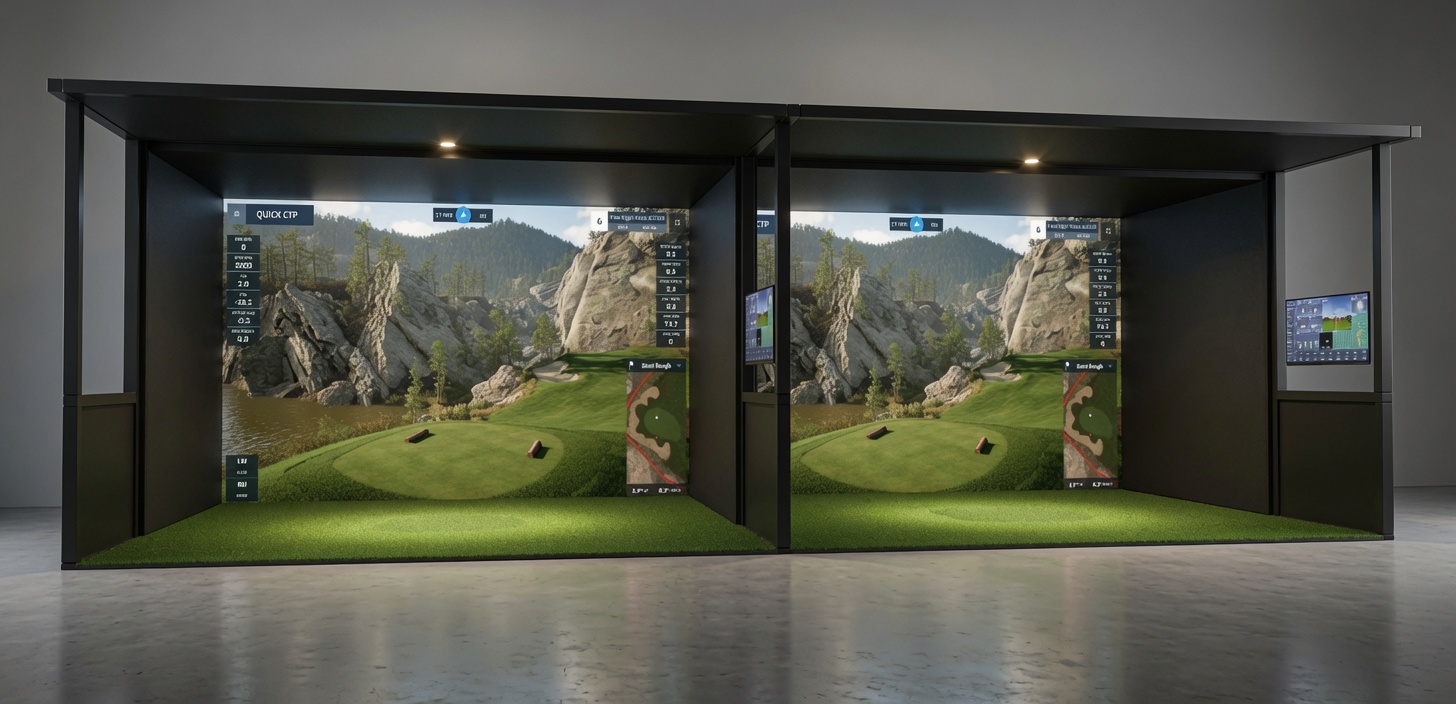
A commercial client came to us with a plan for four Rapid Bays in their facility in Dripping Springs. The space supported four bays dimensionally. The business plan penciled out on four bays. They were ready to go.
Our recommendation: three bays.
- Four Rapid Bays
- Maximum revenue capacity
- Higher total project cost
- Tighter fit in the space
- Less room between bays
- Three Rapid Bays
- Better experience per bay
- More comfortable spacing
- Lower entry cost
- Easier to expand to four later if needed
The math on four bays made sense on paper. But at that location with that space, four bays would have felt tight. The user experience in each bay would have been worse — slightly compressed, slightly louder from adjacent bays, slightly less premium. And this client's entire pitch to their customers was premium.
Three bays at that price point, with proper spacing, would deliver a better experience per visit, charge the same rate, and get to the same revenue per bay faster through repeat customers and word-of-mouth. They could also add a fourth bay once the business was established, rather than betting the whole buildout on maximum capacity from day one.
They went with three. The build came out well.
Example: Retractable Everything
The Retractable Setup Revision
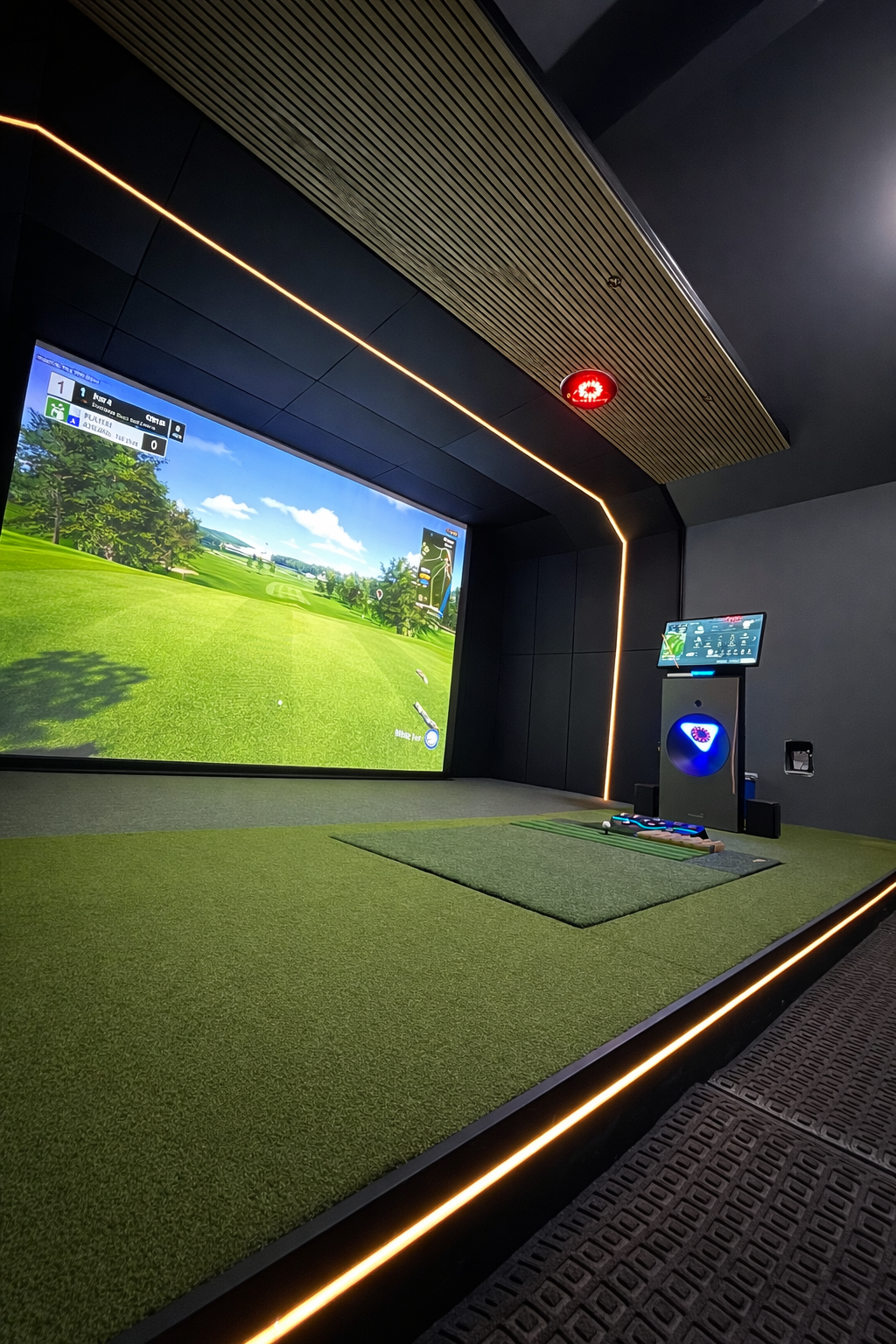
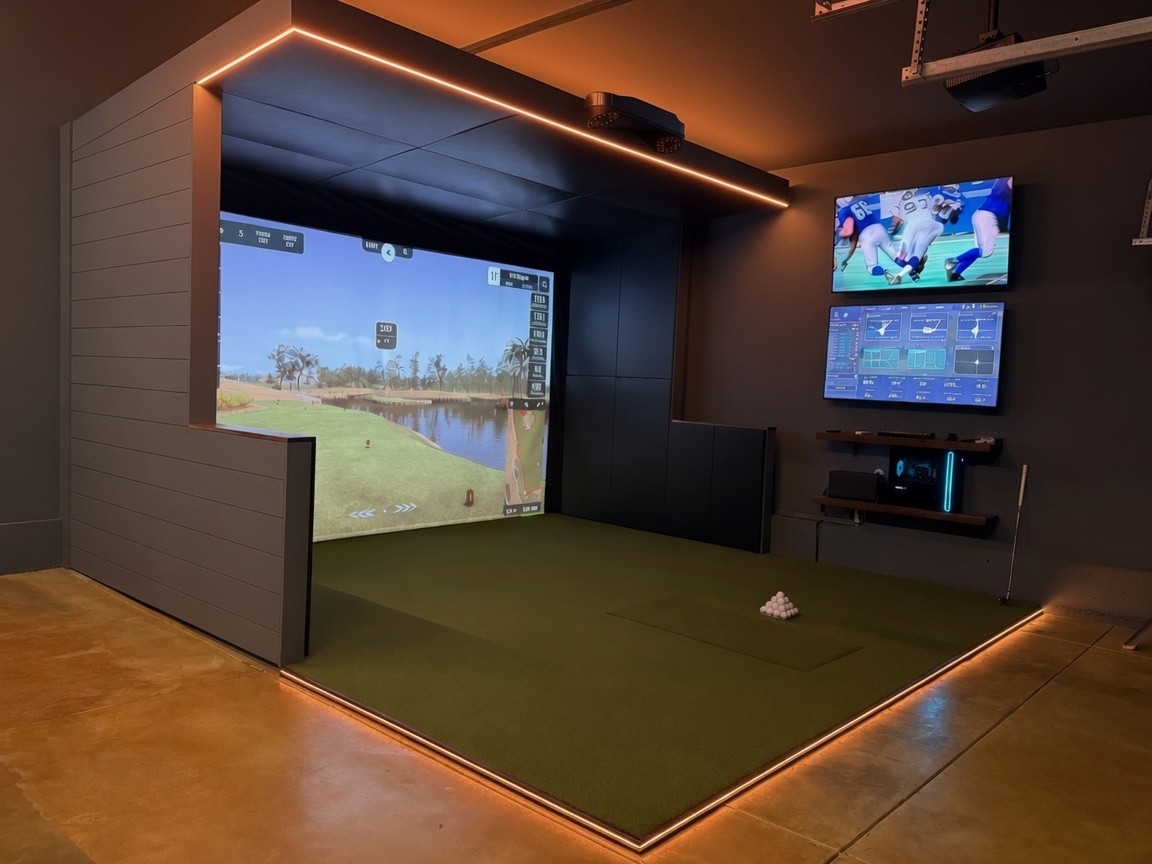
A residential client in Monterey had been thinking about their simulator room for a long time. They wanted maximum flexibility: retractable screen, retractable side walls, retractable hitting mat — everything put away when not in use. Completely clean space when the simulator wasn't running.
We could have built it that way. We didn't recommend it.
- Fully retractable screen
- Retractable side walls
- Retractable hitting mat
- Maximum complexity
- More failure points
- Built-in impact screen
- Retractable side walls (kept)
- Permanent hitting mat
- Cleaner, more reliable setup
- Same visual result when in use
The retractable side walls made sense — they give the room a genuinely different look when the sim isn't running. That's a real benefit, and we kept them. But a retractable impact screen introduces mechanical complexity that creates problems over time. The screen needs to be tensioned correctly every single time it's deployed to track properly. The mechanism wears. The calibration drifts. And the moment you start the simulator with the screen not quite right, the experience is noticeably worse.
A built-in screen, properly installed and properly tensioned once, is simply better as a tracking surface. The screen disappears against the wall visually anyway. There's nothing to gain by making it retractable except a maintenance liability.
The client got a better simulator and a cleaner room than they would have with their original plan.
How We Think About Your Project
The question we're always asking isn't "what does the customer want?" — it's "what are they actually trying to accomplish, and what's the best way to get there?"
Those two things are different. What a customer wants is often framed by what they've seen online, what their budget feels like it should buy, or what sounds impressive. What they're trying to accomplish is usually: a great golf experience that looks good and works reliably, now and in five years.
We think in time horizons. Day one is the easiest problem — almost anything looks impressive on day one. Month six is when you find out if the materials held up, if the retractable mechanism is still calibrating right, if the customers are still enthusiastic. Year three is when you find out if you built something that was actually designed for function and durability, or just for the initial reveal.
This is also why we enforce material limits. When customers work with interior designers or have strong aesthetic preferences, they sometimes push for materials that would look stunning on a magazine shoot but deteriorate quickly in actual use. We'll tell you when a material isn't going to hold up — not to be difficult, but because we'll still be the company whose name is on that build when the fabric starts looking worn in eight months.
More Examples From the Field
The two cases above are the ones we talk about most, but they're not unique. A few more patterns we see regularly:
- The wrong launch monitor for the use case. Customers see Trackman and want Trackman. Sometimes that's the right call. Often, for a commercial facility where a ProTee VX at a fraction of the cost will deliver the same player experience, it's not. We'll tell you which one makes sense for your situation and why.
- Undersized rooms that need a different enclosure approach. Some rooms won't fit the build the customer imagined. Instead of trying to cram it in, we'll 3D model the actual numbers and show you exactly what fits and what the experience will be. Sometimes that changes the decision. Sometimes it confirms the plan. Either way, you're deciding with real data, not assumptions.
- Overspecced projectors. A 4K throw-ratio mismatch in a 14-foot room doesn't look better than 1080p — it just costs more and adds heat. We spec projectors based on the actual geometry. See our projector guide for the details.
What We Actually Bring
When you bring us a project, here's what you're actually getting:
- 3D modeling and design of the space, including clearances, screen size, projector placement, and technology layout before a single piece of material is ordered.
- Project management — we coordinate directly with your GC, electrician, plumber, and any other trades that need to know where our work starts and ends. You don't have to play phone tag between contractors.
- Honest recommendations on scope. We'd rather do a smaller project right than a larger project wrong. If four bays is too many, we'll tell you. If the retractable screen doesn't make sense, we'll tell you.
- Experience across 200+ builds. We've seen what works at six months. We've seen what customers regret. We've seen what construction stages create problems if we don't get ahead of them early.
For a detailed walkthrough of our process from first call to first swing, read what to expect when you hire us or visit the process page.